


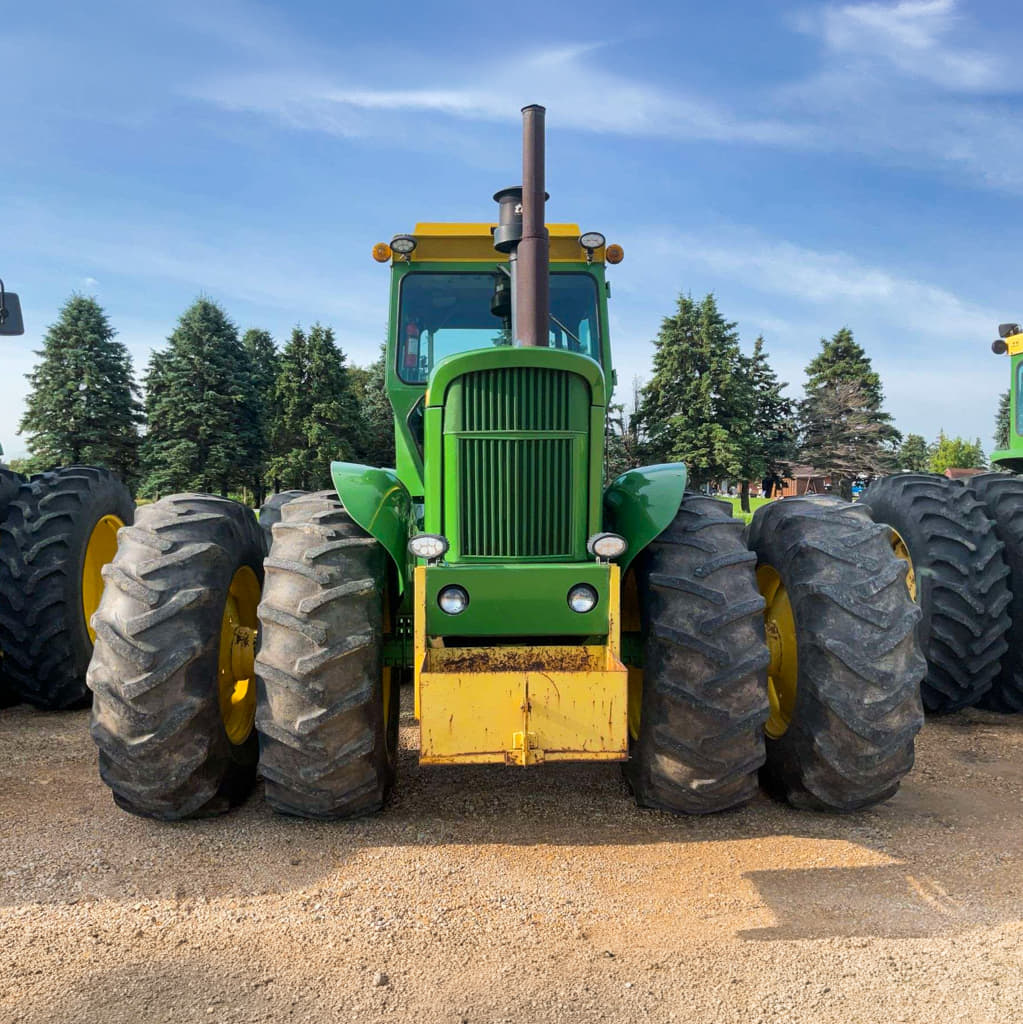
John Deere 7520 listings on Tractor Zoom
Y’know, for a tractor that looks unmistakably like a classic John Deere, the 7520 represented a pretty big shift in the wind. It was big, articulated, and powered at all four corners. The cab sat high above the ground, with roughly an acre of green sheet metal stretching out ahead of it. Depending on how it was equipped, a 7520 could tip the scales at well over ten tons.
This wasn’t your ordinary Waterloo tractor.
More importantly, it was one of the first articulated four-wheel-drive tractors John Deere designed and built in-house. Along with its slightly smaller brother, the 7020, it marked the point where Deere finally got serious about building its own big 4WDs.
False Starts…
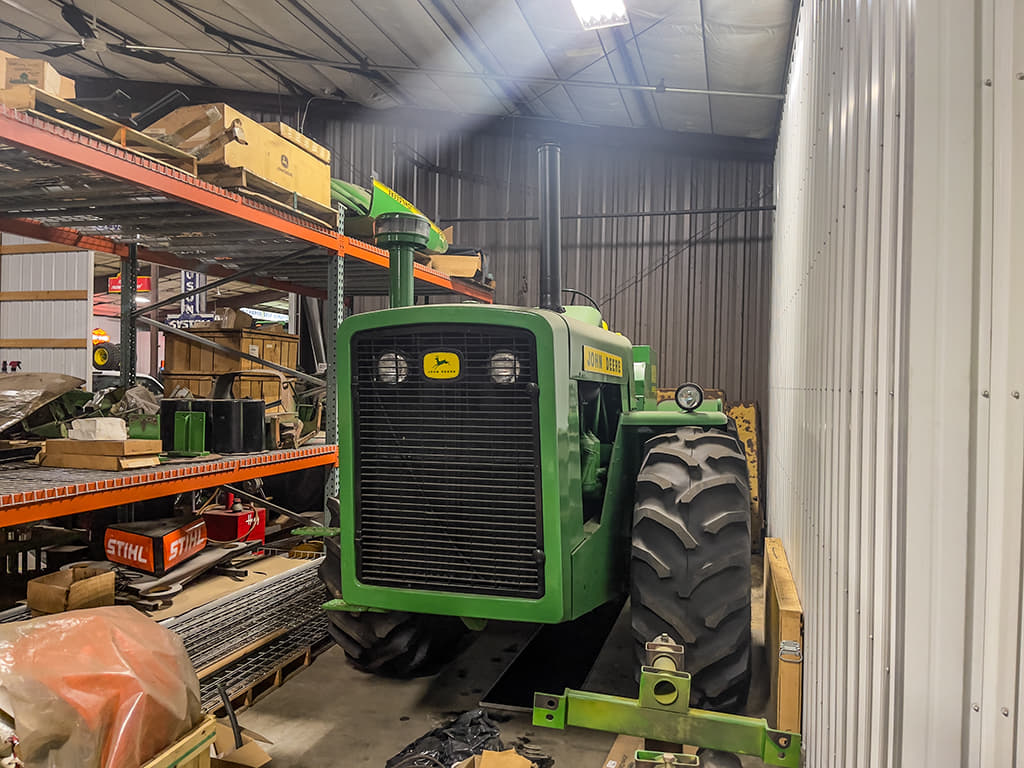
Deere had experimented with 4WD models before. The spec-built 8010/8020 tractors arrived in 1960 and while they’re pretty neat to look at, they definitely weren’t a great tractor (or a great market fit). They suffered crippling transmission failures and Deere recalled all but one of ’em for rebuilds/rebadges. Furthermore, they were big, heavy, and spendy!
Later in the decade, Deere briefly partnered with Wagner to have them build the WA-14 and WA-17. Wagner manufactured them in Oregon using Cummins power. They filled a hole in the lineup, but they weren’t the long-term answer. Again, they were heavy and didn’t sell well. Overall, I think even Deere would consider those tractors to be dumpster fires. Pretty sure Wagner would too, but that’s a story for another day.
Homegrown Horsepower
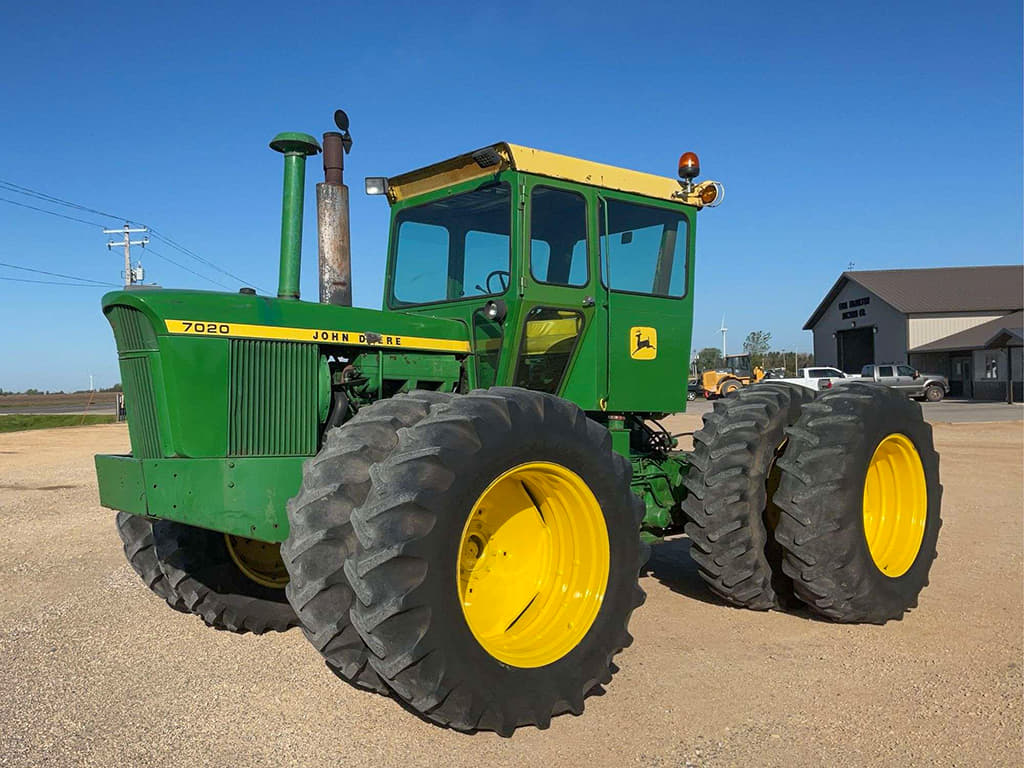
Deere’s homegrown answer to the 4WD problem came in the early 70s with the 70- and 7520s.
The 7020 came first for the 1971 model year. Deere powered it with a turbocharged and intercooled 404-cubic-inch six-cylinder diesel sourced from the 4520. It produced about 145 PTO horsepower, which was plenty respectable for the time. Deere built 2,586 of them at Waterloo through 1975. However, farmers were buying bigger equipment, covering more ground, and asking for more horsepower. Despite building a reputation for being a touch on the fragile side, the 7020 sold reasonably well…until the 7520 released.
The 7520
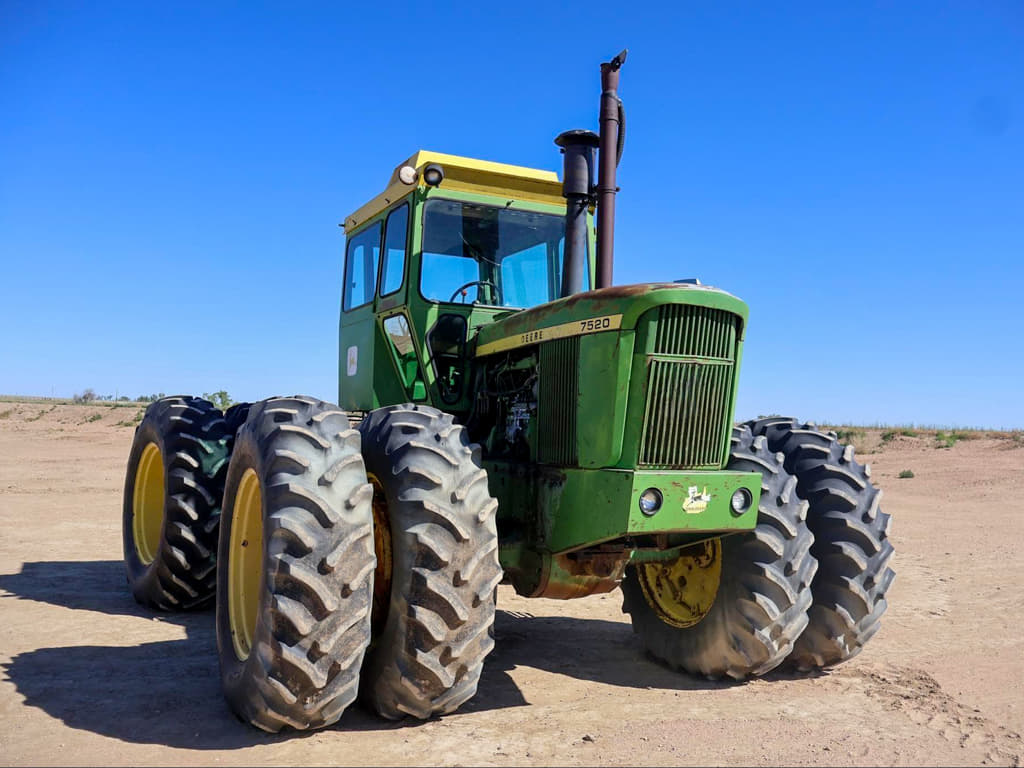
The 7520 entered the chat for the 1972 model year, and it packed a punch. Under the hood sat Deere’s 531-cubic-inch six-cylinder diesel. It was turbocharged, intercooled, and rated at 175 PTO horsepower. In testing at the Nebraska Lab, the 7520 turned similar numbers to the 6030; 175.82 horsepower at the PTO and just over 160 horsepower at the drawbar. That put the 7520 squarely in big-tractor territory.
Deere offered an eight-speed partially synchronized transmission, although most buyers opted for the 16-speed version with a two-range setup. It was not a powershift. Shifting required a little planning, and nobody was going to mistake it for one of Deere’s later Quad-Range tractors. Then again, neither of these two machines were built for constant shifting. They were built to settle into a gear, hook onto something wide, and pull it until they ran out of field.
Heavyweights
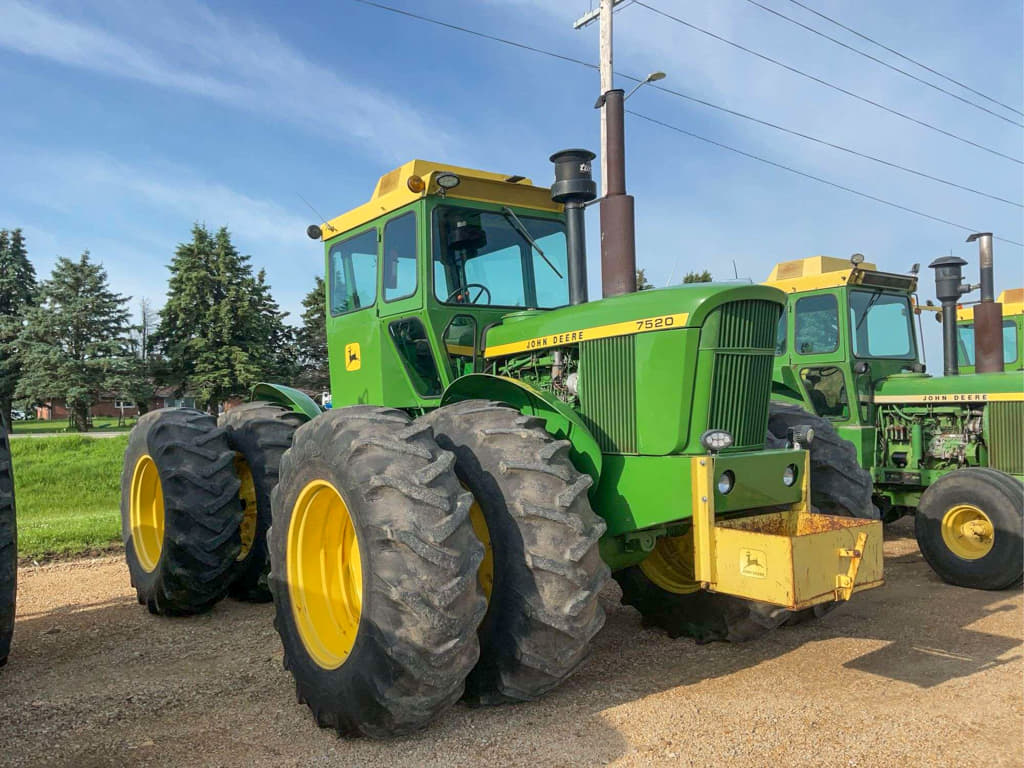
At around 16,800 pounds dry weight, the 7520 already had plenty of iron in it. Add duals, ballast, a three-point hitch, and other equipment, and operating weight could climb past 22,000 pounds. It carried up to 156 gallons of fuel, which was probably a good thing. At full PTO load, the Nebraska test tractor burned more than 11 gallons per hour. It was thirsty!
The articulated frame gave the 7520 better maneuverability than its size suggested. Instead of steering the wheels, hydraulic cylinders pivoted the tractor near its center. It was a layout already proven by companies like Wagner, Steiger, and Versatile, but this time the engineering belonged to Deere.
Styling
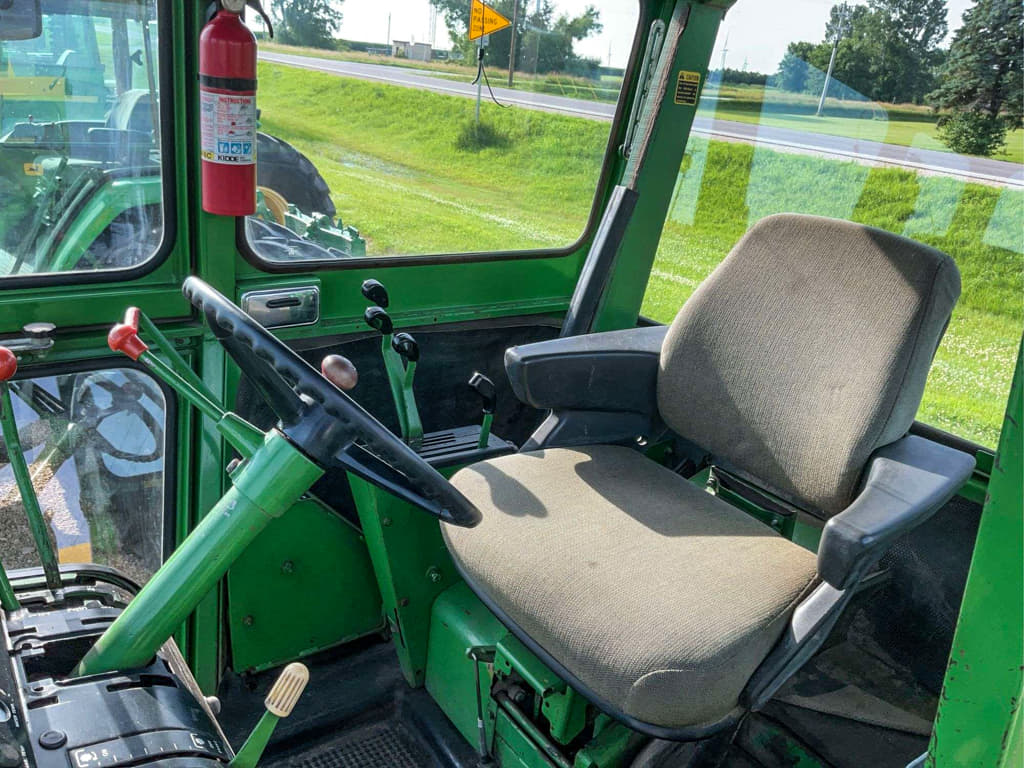
Styling tied it directly to the rest of the New Generation tractors. The grille, hood, yellow stripe, and side screens all look like they’ve been scaled up from a 4020 or 5020. The cab followed suit as well. See, the 7520 arrived just before Deere’s SoundGard era changed expectations for operator comfort. The 7520’s cab provided weather protection, but it lacked the refinement and isolation of the 30 Series tractors that followed. It was loud, tall, and fairly basic. In other words, it still felt like an old-school muscle tractor.
Deere built 4,661 examples between 1972 and 1975. That was considerably more than the 7020, but still a small number compared with Deere’s popular row-crop models.
By 1975, the company was ready with a new generation of articulated tractors. The 8430 and 8630 brought more horsepower, updated styling, and the Sound-Gard Body. When they came out, it made the 7520 feel like an outdated answer.
Overall
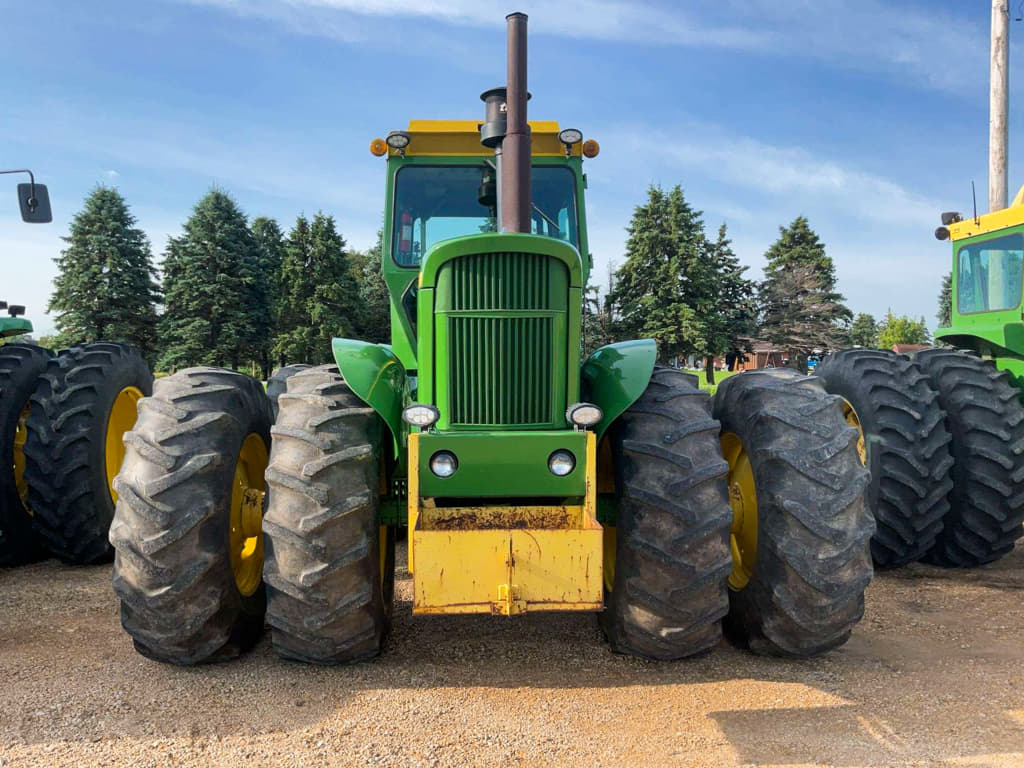
Outdated answers don’t signify failure, though.
The 7020 and 7520 gave Deere valuable experience building articulated tractors at Waterloo. They established the basic formula Deere would continue refining for decades: Deere-built engines, Deere drivetrains, four equal-sized tires, and a hinge in the middle. They also arrived during a fascinating period in tractor history. Horsepower was climbing quickly, equipment was getting wider, and manufacturers were still figuring out what a modern 4WD tractor ought to be.
The 7520 was Deere’s first real answer.
It certainly wasn’t as polished as the tractors that followed. It wasn’t the largest tractor available, either. However, it was big, unmistakably green, and important enough to change the direction of Deere’s high-horsepower lineup. Furthermore, there are still a decent number of them standing on business on farms across this country. I’ve got several buddies within a couple of hours of me who rely on these tractors year in/year out, and you couldn’t give them an upgrade!
At the end of the day, some of the most interesting tractors aren’t the ones that perfected an idea. They’re the ones that proved the idea was worth chasing, y’know?
Wrapping it up
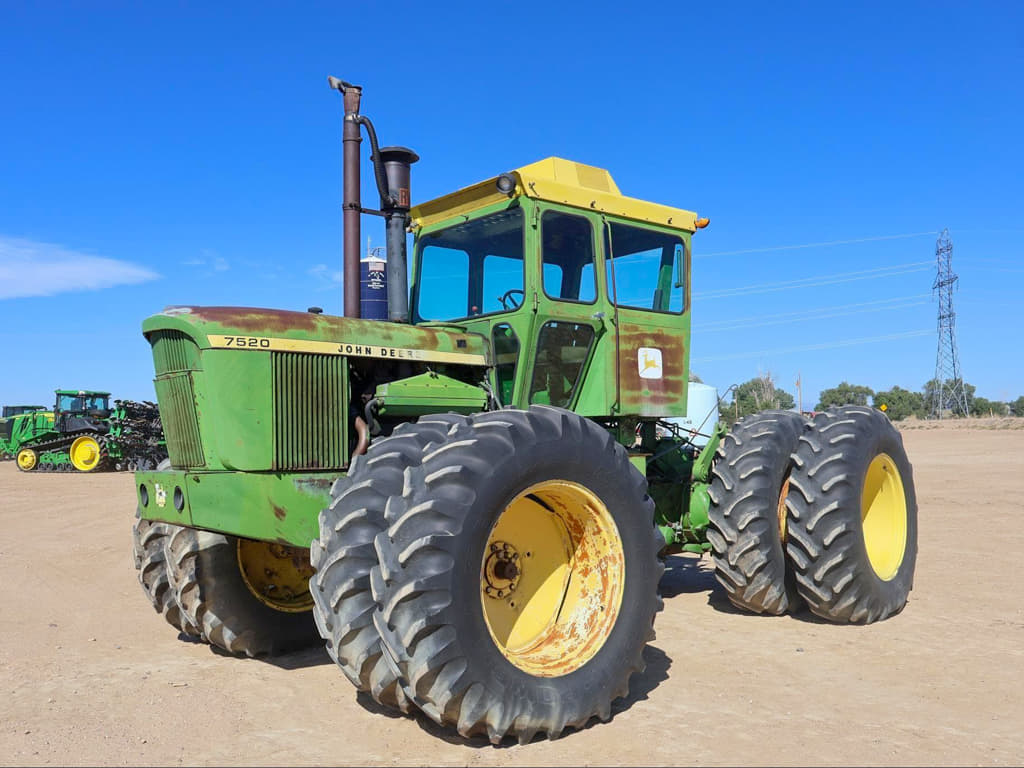
On the whole, while we see a lot more later-model John Deere 4WDs crossing the block, we still do see a few of the old-school models every year. Some are well-kept, some look like they’ve been dragged out of the fencerow, and the pricing reflects that. Well-kept models sell in the high teens/low twenties, fencerow specials bring a fair bit less.
Still, when you find a good one, they’re always worth a closer look. This month, we actually have a handful listed at the same time, which is somewhat rare. HM Auction Group has a very nice 1975 model with fenders (which is extremely rare) that’s been used and owned by the same family for 35 years. It’s got just over 5900 hours on it and it’s very clean. I’d expect it to hit the top of the market value. Kreps Wiedeman has one with a little more patina and a fair bit less history, but the sheet metal is nice and straight and it runs and drives as well.
I’ve always had a thing for these tractors; I feel like they blend old-school cool with what (at the time) was to be a very bright future for ag. I’ve never had a chance to run one, but the next time I make it out to my buddy Aaron’s place, I hope I can kick him out of the seat for a few minutes!
Check out those 7520s we’ve got listed right now. They’re pretty neat!


